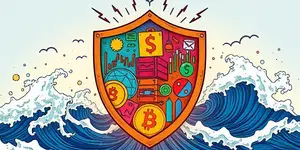
Financial crises are seldom the result of a single misstep; they emerge from a tapestry of decisions, structures, and blind spots. Understanding how seemingly stable markets unraveled offers a roadmap for building resilience and preventing future meltdowns.
At the heart of the 2007–2008 crisis lay excessive risk-taking in a favorable economic environment. With low interest rates, steady growth, and minimal unemployment, lenders and investors chased ever-higher returns. Mortgages were issued not just to creditworthy borrowers but to those with dubious repayment capacity—so-called subprime borrowers.
These loans, often labeled “NINJA” (no income, no job, no assets), were packaged and sold as securities. Originators believed housing prices would continue rising, so assessing true borrower risk became secondary to volume. This dynamic created a classic housing bubble.
Meanwhile, the rise of securitization transformed mortgages into tradable assets. Thousands of loans—of wildly varying quality—were bundled into Mortgage-Backed Securities (MBS) and Collateralized Debt Obligations (CDOs). Despite inherent risks, credit rating agencies assigned these products AAA ratings, thanks to flawed models and fee-driven conflicts of interest.
The crisis unfolded over several stages. Initially, booming home prices hid underlying fragility. In early 2007, housing values began to decline, triggering a wave of borrower defaults and foreclosures. This first tremor rattled Wall Street.
By mid-2007, major institutions like Bear Stearns had large exposures to subprime MBS and CDOs, leading to instability. Investors grew wary, and liquidity started to dry up in short-term funding markets such as the repurchase (repo) market.
September 2008 marked the apex of panic. Lehman Brothers’ sudden collapse shattered interbank trust. Money market funds "broke the buck," and AIG required an unprecedented government rescue to contain contagion. Within days, credit markets froze, and the threat of a global depression loomed.
The crisis exposed fundamental weaknesses across multiple pillars of the financial system. Governance structures rewarded short-term gains over sustainable growth, allowing risks to accumulate unnoticed.
Rating agencies, reliant on issuer fees, misrepresented the safety of mortgage products. Government-sponsored entities took on excessive mortgage exposure with inadequate capital buffers. At the same time, hidden dependencies in trilateral repo arrangements created a web of potential failures.
As markets teetered, policymakers intervened with a blend of liquidity injections, debt guarantees, and capital infusions. The Federal Reserve and Treasury orchestrated massive backstops to restore confidence, though these measures were viewed by some as ad-hoc and insufficiently coordinated at first.
In the aftermath, regulatory frameworks underwent significant overhaul. The aim was to harden institutions against future shocks by addressing the very amplifiers that had driven the crisis.
The financial crisis taught us that complacency in calm markets is dangerous. Continuous vigilance is necessary to detect brewing imbalances before they mushroom into systemic collapses.
Risk ownership must start at the top. Boards, executives, and regulators share responsibility for maintaining healthy risk culture. No one should assume that past stability guarantees future safety.
Building resilience means maintaining robust capital buffers, limiting reliance on volatile short-term funding, and removing hidden leverage. Institutions must identify potential stress points—like tri-party repos and money fund dynamics—and design safeguards against runs.
Accountability matters. Conflicts of interest, misaligned incentives, and opaque structures allowed vulnerabilities to fester. Greater transparency and independent oversight help ensure that risks don’t hide in plain sight.
Although reforms have strengthened many walls against a repeat of 2008, the global financial system remains interconnected and dynamic. Emerging technologies, new financial products, and evolving market behaviors continually create fresh challenges.
The 2007–2008 crisis was not an isolated incident but the culmination of repeated governance failures, mispricing of risk, and a misplaced faith in perpetual growth. Its lessons resonate far beyond banking: every industry must heed the dangers of unchecked leverage, misaligned incentives, and hidden vulnerabilities.
By studying the anatomy of past crises, we empower ourselves to anticipate, withstand, and mitigate future shocks. A commitment to transparency, strong governance, and proactive risk management isn’t just prudent—it’s essential for a stable economic future.
References